The Prettier the Notion Template, the Deeper the Burnout
I deleted all my To-Do lists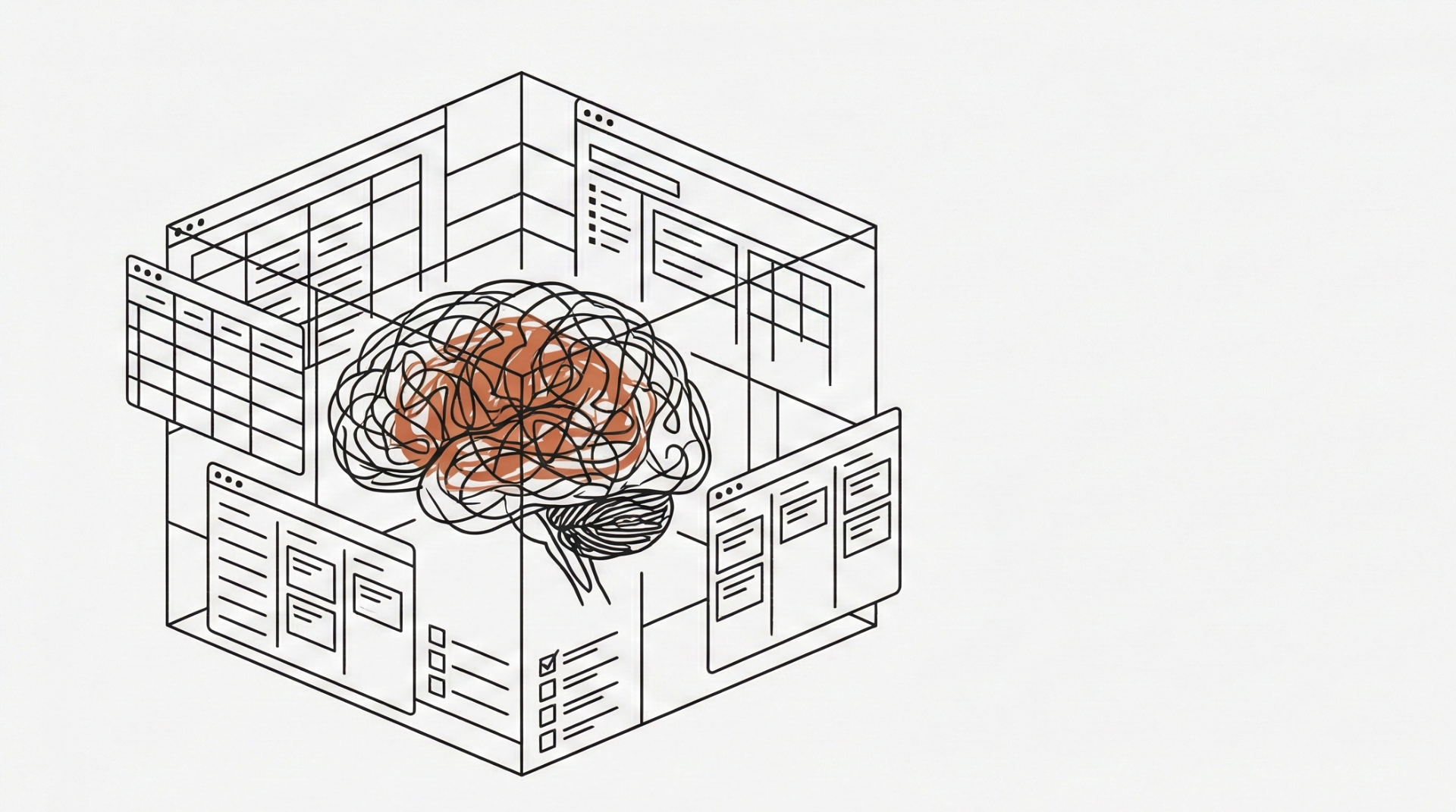
In today’s internet discourse, claiming to be a “J-type” isn’t about cognitive functions — it’s about an aesthetic.
It’s an aesthetic built on specific elements: hyper-complex Notion dashboards, color-blocked Google Calendars, and quantified-self systems tracking everything from sleep scores to hydration levels.
Algorithmically, “J” has drifted away from the MBTI definition of “Judging.” It now stands for the promise of a curated, organized life. It suggests that if you slice life with enough granularity and digitize every detail, you unlock absolute control over your destiny.
But this is likely a collective hallucination.
We are experiencing the “Spectacularization of J.”
Browse the productivity niches on YouTube or social media, and you’ll see that planning has become more performative than doing. Creators show off database formulas, aesthetic covers, and “n8n” automations. In this world, chaos is a sin and white space is wasted inventory.
The expectation for a J-type is to have a perfect digital system. Life isn’t lived; it is managed. This pressure alienates the tools we use:
- Notion isn’t just for notes; it’s a modern “digital altar.”
- Todo lists aren’t for reminders; they are KPI sheets for self-worth.
We start working to keep the system running, rather than using the system to work. This is classic “Meta-work” — we spend more time grooming backlogs and polishing templates than actually solving problems.
Why the obsession?
It’s an inward-facing defense mechanism against external uncertainty. When the economy is shaky and career paths are volatile, we can’t control the results, so we fetishize controlling the process.
- I can’t prevent a layoff, but I can ensure my 8:00 AM slot is marked “Deep Work” in blue.
- I can’t control the meaning of life, but I can control closing my rings on my Apple Watch.
Digitizing life is a modern spell. The ritual of Data Entry provides a false sense of safety: “I captured it in my Inbox, therefore it can no longer hurt me.”
The fatal error: Confusing “Inner Order” with “Outer Tidiness.”
In Jungian theory, “Judging” is about a preference for closure. A true J-type is defined by decision-making, categorization, and settling matters.
- The Real J: Might have a messy desk, but has razor-sharp decisiveness and clear internal priorities.
- The Performative J: Has a flawless Notion setup but suffers from Analysis Paralysis, trapped in the details and unable to execute.
People obsessed with the “Ultimate Productivity Stack” often suffer from internal chaos. They build rigid, complex external scaffolding to support a crumbling internal structure.
The cost? The loss of “Aliveness.”
When movies become database entries, walks become GPS tracks, and hangouts become Calendar Events, life is flattened into a giant spreadsheet.
Spreadsheets are efficient. But they are cold.
Real order isn’t a complex dashboard or an empty Inbox. Real order is Mental Clarity. It’s knowing what matters right now, and what you can afford to leave messy.
Use the tools; don’t be a slave to them. Next time you spend three hours tweaking a template, ask yourself:
Do you want the feeling of control, or do you want life itself?